A kitchen cabinet is more than a box behind a painted door. It must carry daily weight, resist steam, and fit the room without wasting an inch. As Julia Child is often quoted, “The kitchen is the heart of every home.” That idea matters when comparing manufacturers: a cabinet may look striking in a showroom, yet feel awkward after months of cooking.
China’s kitchen cabinet industry offers a wide range of choices, from made-to-order designs to large-scale production. The top manufacturers differ in materials, construction, finish options, delivery capacity, and after-sales support. Some excel at sleek, handleless fronts. Others offer practical storage details, such as deep drawers, pull-out baskets, and sturdy hinges that close softly. Small details count.
This guide explores ten leading Chinese manufacturers and the factors buyers should check before making a shortlist. We consider product quality, customization, production experience, and export readiness, while recognizing that capabilities can vary by factory and project. A polished catalog is not proof of consistent workmanship. Ask for material specifications, inspect samples, and clarify lead times. Even then, a comparison may miss something; supplier claims deserve careful verification. That is part of the work. By looking beyond price and appearance, buyers can assess which Kitchen Cabinets partner best fits their space, budget, and expectations.
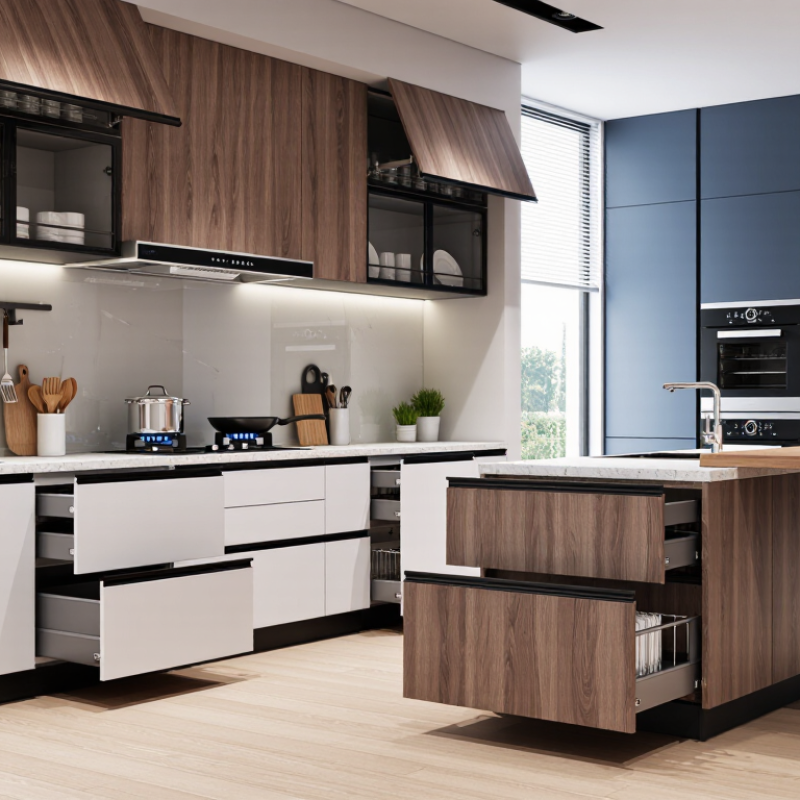
China’s kitchen cabinet industry is not a single factory system. It includes large integrated manufacturers, regional production clusters, specialist component suppliers, and smaller custom workshops. Some factories cut panels, apply edge banding, drill holes, and assemble cabinets under one roof. Others coordinate separate suppliers for boards, hardware, finishes, and packaging. The structure varies by region and order size.
For overseas buyers, OEM and ODM arrangements are common. An OEM supplier builds to the buyer’s drawings, while an ODM supplier may also help develop cabinet dimensions, finishes, or layouts. Larger facilities can often handle repeat orders more consistently, but smaller workshops may offer flexible sizing. Neither model guarantees quality. Inspect sample joints, drawer movement, edge sealing, and finish consistency under ordinary room light. A cabinet can look polished in a photo and still have uneven gaps. This industry map is useful, though it can oversimplify how suppliers work together.
Tips: Ask who makes the cabinet boxes, doors, and hardware. Request recent production photos, material specifications, and a written sample approval process. Check how the supplier handles measurements and packaging, too. Small details matter. A careful review takes time, and I would not skip it just to speed up a quote.
A credible ranking of Chinese kitchen cabinet manufacturers should rely on verifiable criteria, not polished photos or broad claims. Compare material specifications, construction quality, production capacity, and documented quality-control procedures. Inspect sample doors and drawer boxes for even gaps, smooth edges, sturdy joints, and consistent finishes. Details matter.
Assess whether each manufacturer can provide clear project communication, realistic lead times, customization options, and dependable after-sales support. Ask for test reports or inspection records where relevant, and check whether the evidence matches the exact product being offered. A ranking should also consider export experience and the ability to protect products during shipping. Still, scoring is imperfect: a large factory may suit a major project but offer less flexibility for a small renovation.
Tips: Request a written specification sheet and a physical sample before comparing quotes. Check hardware, panel thickness, finish, and packaging separately. Ask how defects are recorded and resolved. Small checks help. One limitation: samples may not fully reflect the consistency of a full production run.
China’s kitchen-cabinet manufacturers range from large automated plants to specialist workshops. The National Bureau of Statistics reported that above-scale furniture manufacturers generated RMB 655.7 billion in revenue in 2023, down 4.4% year on year. This figure covers furniture broadly, not kitchen cabinets alone, so it offers context rather than a cabinet-market ranking.
A useful ten-profile comparison can cover a high-volume modular producer, a made-to-order cabinet maker, a solid-wood specialist, and a plywood-focused factory. It can also include a board-based manufacturer, an aluminum-frame producer, an appliance-integrated supplier, an export-oriented factory, a regional custom workshop, and a project-focused contractor. Each profile answers different needs.
Ask about board grades, edge sealing, hinge cycles, and finish consistency. Small details matter.
Factory claims need verification. Request dated production photos, material specifications, and sample doors under natural light. Check whether the quoted lead time includes measurement, installation, and replacement parts.
A showroom can look flawless; a cabinet corner reveals more.
This framework is imperfect: capacity and product quality can vary between production runs. The 2023 industry figures come from the National Bureau of Statistics, while cabinet-specific comparisons should be checked against current factory records.
A useful comparison of China’s top 10 kitchen cabinet manufacturers should look beyond showroom appearance. Product range matters: check whether each supplier offers only standard modular units or also custom sizes, finishes, hardware, and matching bathroom storage. Grand View Research valued the global kitchen cabinet market at US$75.8 billion in 2023 and forecast 4.6% annual growth through 2030. This points to a competitive market, but it does not prove that any individual factory meets a buyer’s needs. Details matter.
Quality is easier to assess with evidence than with broad claims. Ask for material specifications, finish samples, test records, and inspection procedures. Compare cabinet-board thickness, edge sealing, hinge performance, and packaging for long-distance shipping. China Customs data put furniture and parts exports at roughly US$68.7 billion in 2023; this broader category includes products beyond kitchen cabinets. Export scale signals manufacturing experience, not consistent quality. A glossy showroom can mislead.
Export reach also depends on communication, documentation, lead times, and the ability to replace damaged components. Request references from markets similar to yours, plus a sample order before committing to a large shipment. Compare the same cabinet specification across all ten manufacturers; otherwise, price differences may reflect different materials or hardware. One weakness remains: public data rarely separates kitchen cabinetry from other furniture, so factory-level checks still matter.
Choosing a Chinese kitchen cabinet manufacturer begins with your project requirements, not a polished catalog. Write down cabinet dimensions, door styles, finishes, hardware, and installation details. Ask how measurements are confirmed before production. A small error near a refrigerator opening can create expensive delays. Details matter.
Check the manufacturer’s production capabilities and quality checks. Request recent project photos, material specifications, and a sample door or finish panel. Inspect edge banding, surface consistency, and hardware movement in person if possible. Ask whether the sample uses the same materials planned for your order. A sample may look excellent under showroom lights, yet different in a sunlit kitchen. I would not rely on photos alone.
Compare quotations item by item, including packaging, shipping terms, lead times, and replacement procedures for damaged parts. Clarify who handles design changes and how quickly they respond. Ask for production updates at agreed milestones, plus inspection records before shipment. Communication matters. If answers stay vague, pause and ask more specific questions. One uncomfortable detail: a lower quote may reflect thinner panels or fewer checks, but only a clear specification can confirm that.
It includes integrated factories, regional production clusters, component suppliers, and smaller custom workshops. Some facilities handle panel cutting, edge banding, drilling, and assembly in-house.
OEM suppliers build cabinets from a buyer’s drawings. ODM suppliers may also help develop dimensions, finishes, or layouts.
Inspect the joints, edge sealing, drawer movement, and gaps. View the finish in ordinary room light, not only in photos. Small details matter.
Ask who makes the cabinet boxes, doors, and hardware. Request material specifications, recent production photos, and written sample approval details.
Compare construction quality, materials, production capacity, customization, lead times, and communication. Also review quality-control records and after-sales support.
Not always. Large facilities may manage repeat orders consistently, while smaller workshops may offer more flexible sizing.
No. A sample shows useful details, but it may not reflect consistency across an entire production run. That limitation is easy to overlook.
Ask how cabinets are measured, packaged, and protected for shipping. Check packaging details separately from the cabinet finish.
Request inspection records or test reports where relevant. Confirm they match the exact product being offered. Evidence can be incomplete.
China’s kitchen cabinet manufacturing industry includes a wide range of producers, from large-scale factories with extensive export operations to specialized manufacturers focused on particular materials, designs, or custom projects. Identifying the top 10 requires looking beyond company size: useful criteria include manufacturing capacity, product consistency, design capabilities, customization options, quality-control practices, and experience serving international buyers.
A comparison of leading manufacturers can help clarify differences in product range, finish and construction quality, production flexibility, and export reach. When selecting a supplier, buyers should also consider communication, lead times, minimum order requirements, material specifications, packaging, and the availability of samples or project support. By assessing these factors against their budget and needs, buyers can make a more informed choice and find a partner suited to their Kitchen Cabinets project.