Custom Kitchen Cabinets shape how a kitchen looks, works, and feels after years of daily use. A well-planned cabinet can make a narrow corner useful, keep cookware within reach, and fit an unusual wall without awkward gaps. But craftsmanship is only part of the decision. Buyers also need to compare materials, joinery, finishes, hardware, customization options, lead times, warranties, and installation support. A beautiful sample door cannot tell the whole story.
Interior designer Nate Berkus has said, “Your home should tell the story of who you are, and be a collection of what you love.” That perspective is useful when choosing cabinetry: a kitchen should reflect real habits, not just a showroom display. The manufacturers in this guide serve different needs, from tailored, made-to-order designs to broader collections with flexible options. Their strengths may vary by region, budget, and project scale. There is no universal winner.
This Top 10 overview compares manufacturers through practical questions: What can be customized? Which materials and finishes are available? How clearly are construction details and service terms explained? These distinctions matter. Still, any ranking has limits; local dealers, installers, and delivery conditions can change the experience considerably. Use the list as a starting point, then verify specifications and samples for your own project. A little skepticism helps. A cabinet is a long-term purchase, and the details behind the finish deserve attention.
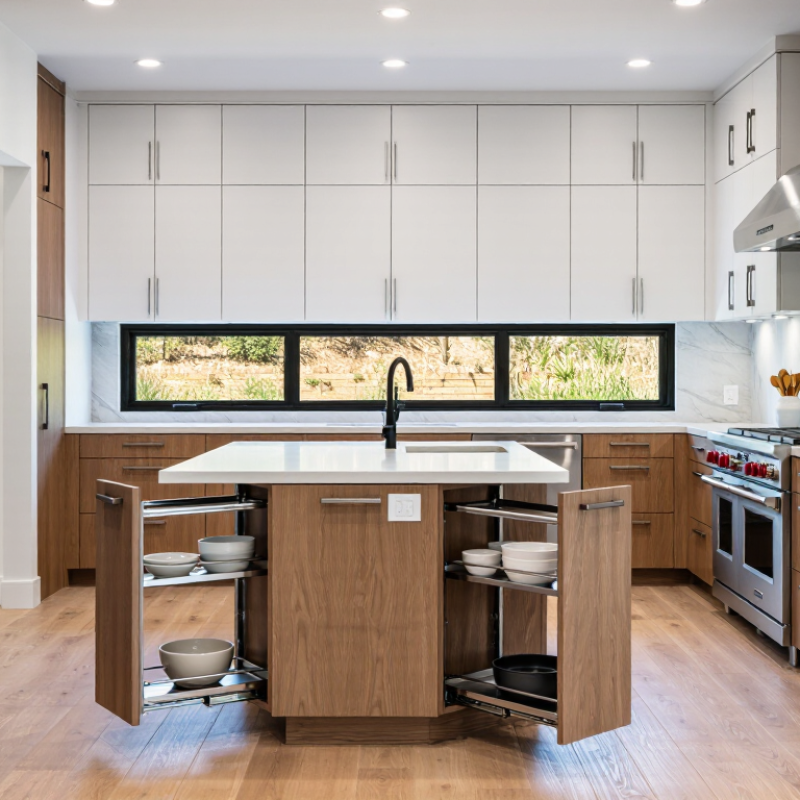
A custom kitchen cabinet manufacturer builds cabinetry to a project’s measured dimensions and documented specifications, rather than relying only on fixed stock sizes. This can include unusual wall lengths, sloped ceilings, appliance clearances, chosen interior fittings, and coordinated finishes. A sample door under warm showroom lights may look different beside a north-facing kitchen window. Details matter.
Custom does not simply mean “made to order.” Semi-custom lines may allow selected size or finish changes within a preset range, while fully custom work generally begins with project-specific drawings. The distinction can blur. Buyers should review shop drawings, material descriptions, finish samples, hardware schedules, and installation responsibilities before comparing quotes. These records make quality claims easier to check.
Demand helps explain the category’s importance. Houzz’s 2024 U.S. Kitchen Trends Study reports that 76% of renovating homeowners upgraded their cabinets. That figure describes cabinet upgrades, not custom orders, so it should not be read as a custom-market share. A credible manufacturer can explain how it measures, fabricates, finishes, and installs each project, and how it handles adjustments when walls or floors are not square. The process is never perfectly tidy. That deserves scrutiny.
Comparing custom kitchen cabinet manufacturers worldwide requires more than reviewing photographs. A polished showroom can hide uneven drawer alignment or fragile edge banding. Request material samples, finish specifications, and close-up images of completed work. Small gaps matter. Check how doors sit when closed and whether shelves feel stable under everyday dishes.
Compare construction methods alongside customization. Ask whether cabinet boxes use plywood, particleboard, or another substrate, and how exposed edges are sealed. Clarify available dimensions, finish options, hardware choices, and the manufacturer’s tolerance for unusual layouts. Ask for evidence. A clear technical drawing and written specification make it easier to compare offers fairly. Prices can look similar while covering very different components.
Production capacity, communication, packing, and support also affect the experience. Ask how measurements are verified, how damage is documented, and who handles replacement parts. Request realistic lead times, not only the best-case estimate. No score is perfect. A lower-cost supplier may suit a simple renovation, while a complex room may need more design support. Even careful comparisons miss something: finish samples cannot fully predict how a color will look under a kitchen’s actual lighting.
These ten manufacturer profiles compare more than showroom appearance. They examine construction methods, customization depth, material options, lead times, and installation support. The global kitchen cabinet market was valued at about US$100.6 billion in 2023, with projected annual growth of roughly 5.8% through 2030, according to Grand View Research. That expanding market makes careful comparison useful.
The profiles cover different strengths: makers focused on solid-wood joinery, flexible modular sizing, low-emission panels, hand-applied finishes, or precise factory production. Some offer unusual widths and storage details; others keep choices narrower to control consistency. Open a drawer and inspect its runners. Check how finish samples look beside your own flooring, not just under showroom lights. Details matter.
A strong custom supplier should explain cabinet-box materials, edge treatments, hardware options, and warranty terms in plain language. Ask for a measured drawing and a written delivery schedule before approving production. Small workshops may adapt quickly, while larger plants can offer tighter repeatability; neither advantage is automatic. The comparison has limits, too: craftsmanship is hard to judge from photographs, and a beautiful sample may not reflect every installed cabinet.
Common nominal depths for three standard cabinet types, measured in inches.
These are typical planning dimensions, not fixed requirements. Actual cabinet depths vary by design and manufacturer.
Regional cabinet design reflects room size, cooking habits, and local supply chains. North American kitchens often allow larger islands and wider cabinet runs; many buyers also favor full replacement during renovation. Houzz’s 2024 U.S. Kitchen Trends Study found that 76% of homeowners upgrading cabinets replaced all of them. In Europe, compact kitchens and frameless cabinetry are common design responses, while many East Asian projects emphasize tall storage and space-saving layouts. These are tendencies, not rules. A small apartment can overturn any regional assumption.
Production choices differ too. European manufacturers often work with standardized modular dimensions, while North American shops commonly accommodate broader customization and face-frame construction. The NKBA’s 2024 Kitchen Trends Report gathered input from more than 500 industry professionals, a useful reminder that preferences shift with markets and project types. In practice, humidity, board quality, hardware access, and installer skill can matter as much as the door style. I have seen attractive specifications become awkward when local crews could not source matching fittings. That deserves more attention.
Tips: Confirm appliance sizes, wall irregularities, and local material availability before approving drawings. Request a finish sample in the actual room light. Measure twice.
Regional manufacturing profiles, not a ranked list of individual companies. Characteristics below describe common practices and design tendencies; they vary by manufacturer and project.
| No. | Manufacturing region | Common design characteristics | Typical construction and materials | Production and customization profile |
|---|---|---|---|---|
| 1 | United States | A broad mix of traditional, transitional, and contemporary styles; large islands and storage-focused layouts are common in many residential projects. | Face-frame and frameless cabinets are both used. Hardwood, plywood, and engineered wood panels are common, depending on price point and specification. | Made-to-order sizing and finish choices are widely available. Production ranges from local custom workshops to larger factory-based operations. |
| 2 | Canada | Designs often reflect North American preferences, with both painted traditional doors and clean-lined contemporary cabinetry represented. | Hardwood, plywood, and composite panels are used across the market. Cabinet specifications commonly account for varied home layouts and climate conditions. | Custom dimensions and coordinated finishes are available, with production supplied by regional manufacturers and made-to-order shops. |
| 3 | Germany | Contemporary, restrained styling is prominent, with an emphasis on integrated appliances, precise alignment, and coordinated kitchen systems. | Engineered wood panels with durable decorative surfaces are widely used; production often relies on precise machining and standardized component systems. | System-based planning supports coordinated modules, finishes, and fittings. Factory production can combine repeatable components with configurable layouts. |
| 4 | Italy | Design often emphasizes visual coherence, refined proportions, and material or finish contrasts, particularly in contemporary kitchen settings. | Lacquered and veneered surfaces, glass, metal details, and engineered panels are common options across different product ranges. | Modular planning and made-to-order finishes allow designers to coordinate cabinetry with worktops, appliances, and interior architecture. |
| 5 | United Kingdom | Shaker-style doors remain a recognizable choice alongside contemporary slab fronts; designs often adapt to compact or irregular room plans. | Painted timber, veneered finishes, and engineered panels are used. Both framed and frameless cabinet constructions are available. | Made-to-measure options are useful for period homes and nonstandard spaces; supply includes bespoke workshops and configurable product ranges. |
| 6 | Sweden and the Nordic region | Simple forms, practical storage, light colors, and natural-looking finishes are common design themes, though individual styles vary. | Engineered panels and wood-based surfaces are frequently used in modular cabinetry; durable, easy-care finishes suit everyday use. | Modular dimensions and coordinated components support efficient planning, with options for different door fronts, finishes, and interior fittings. |
| 7 | France | The market spans classic and contemporary interiors; cabinetry may be designed to complement architectural details or create a more minimal look. | Painted finishes, veneers, solid-wood details, and engineered panels are used across a wide range of specifications. | Project planning often coordinates cabinet dimensions and finishes with the room layout, appliances, and surrounding interior elements. |
| 8 | Japan | Space-conscious layouts and organized storage are important considerations, with designs often planned around efficient use of available floor area. | Engineered wood panels and durable, easy-clean surfaces are commonly used in system cabinetry; construction details depend on the product range. | Coordinated modules and storage accessories support compact planning. Layouts can be configured to suit appliance placement and household needs. |
| 9 | China | Production serves a wide range of styles, from traditional profiles to contemporary designs; specifications differ substantially by market and project. | Common options include engineered wood panels, decorative laminates, veneers, and lacquered finishes, depending on the selected specification. | Manufacturing includes both large-scale factory production and custom project work. Export orders may require coordination of dimensions, finishes, and shipping requirements. |
| 10 | Australia | Contemporary open-plan kitchens are common in new residential projects, alongside traditional designs and renovations adapted to existing homes. | Laminated and painted panel surfaces, veneers, and timber details are used; material selection depends on design, budget, and project requirements. | Local manufacturing and imported components both contribute to supply. Custom layouts and finish choices are frequently specified for individual projects. |
Choosing a custom cabinet manufacturer requires more than comparing prices. Check whether the company can share material specifications, finish samples, production tolerances, and clear warranty terms. Houzz’s 2024 U.S. Kitchen Trends Study reports that 76% of renovating homeowners upgraded their cabinets, making this a major part of many kitchen projects. Ask how the manufacturer verifies dimensions and protects finished doors during shipping. A sample door should feel solid, with even color and clean edges.
Review the construction details: cabinet-box material, joinery, drawer capacity, hinge quality, and finish durability. Request a written schedule covering drawings, approvals, production, and delivery. Confirm who handles installation questions and replacement parts. A low quote may exclude these services. Compare like with like. I would also inspect a real completed project, not just polished showroom photos; lighting can flatter a finish that looks different at home.
Tips: Send the same room measurements and specification list to every candidate. Ask for one recent project reference and a sample of the exact finish. Check how changes are priced. Small details matter. A slightly uneven reveal can bother you every morning.
They are built to measured room dimensions and project-specific specifications. Sloped ceilings and unusual wall lengths can be accommodated.
No. Semi-custom options usually allow selected changes within set limits. Fully custom work generally starts with project-specific drawings. The line can blur.
Check shop drawings, material details, finish samples, hardware schedules, and installation responsibilities. Paperwork helps clarify what each quote includes.
Request a sample of the exact finish and view it in your kitchen’s lighting. A door under warm showroom lights may look different near a north-facing window.
Ask about cabinet-box materials, joinery, drawer capacity, hinges, and finish durability. Small details matter.
It should list drawing approvals, production, delivery, and installation responsibilities. Confirm who handles replacement parts and questions after delivery.
It may exclude installation support, replacement parts, or other services. Compare matching specifications, not just totals.
Visit a completed project if possible, and request a recent reference. Photos can flatter finishes. I might still miss something in a quick visit.
This article explores what distinguishes custom kitchen cabinet manufacturers from standard cabinet suppliers, including their ability to tailor dimensions, materials, finishes, storage features, and production methods to individual projects. It also explains how manufacturers can be compared through practical criteria such as craftsmanship, material quality, design flexibility, manufacturing capacity, communication, delivery options, and after-sales support. Profiles of ten leading manufacturers worldwide illustrate the range of approaches available, without suggesting that one solution suits every kitchen or customer.
The article also considers how regional design preferences, available materials, production traditions, and home layouts influence cabinet styles and manufacturing processes. For anyone researching Custom Kitchen Cabinets, the final section offers a framework for choosing a manufacturer: clarify project requirements, compare specifications and samples, confirm timelines and service arrangements, and assess how well each provider can meet the intended budget and design goals.